


2. THEORETICAL FOUNDATIONS
2.3. Columns plates
2.3.1. Types of plates
- Perforated plates:
Perforated plates are plates with holes that may be of different sizes. Its construction is the easiest of all.

Figure 2.3: Schematic of a perforated plate.
Source: www.diquima.upm.es
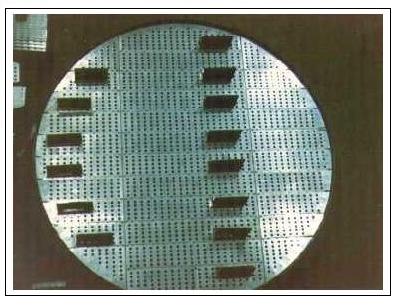
Figure 2.4: Real example of a perforated plate.
Source: www.patagoniavessels.com.ar
- Mumble bell plate:
These plates are the most used throughout of history, so there are many shapes and sizes. The bells are placed on the tubes.
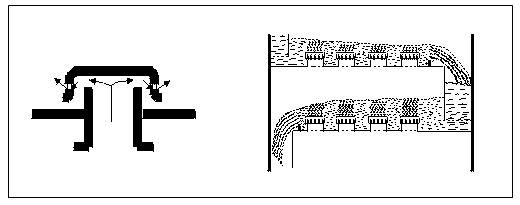
Figure 2.5: Schematic of a mumble bell plate.
Source: www.diquima.upm.es
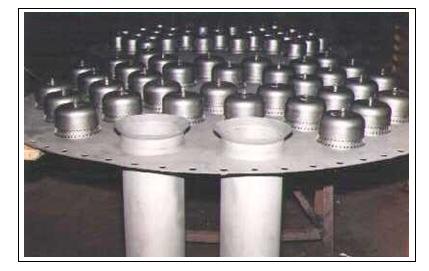
Figure 2.6: Real example of a mumble bell plate.
Source: www.patagoniavessels.com.ar
- Valve plates:
It is an intermediate of the previous two types of dishes. Its construction is on a hole where there is a valve which rises with the passage of fluid flow, is very similar to the mumble bell plate.
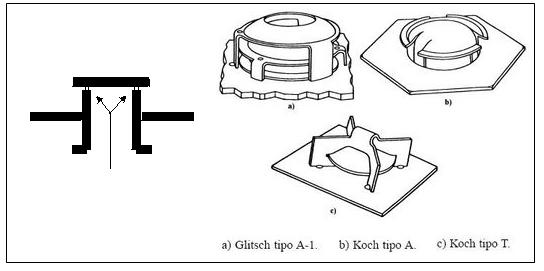
Figure 2.7: Schematic of a valve plate.
Source: www.diquima.upm.es
Although the perforated plate is the most widely used for his ease of construction and its economy, if more flexibility is required, then you have to use other types of plates. Mumble bell plate are usually used for controlling the residence time is optimal to form a specific chemical reaction.